
An entirely open-source AI code assistant inside your editor
Continue enables you to easily create your own coding assistant directly inside Visual Studio Code and JetBrains with open-source LLMs.
Follow the latest facts and developments on one topic.
Continue enables you to easily create your own coding assistant directly inside Visual Studio Code and JetBrains with open-source LLMs.
This repo provides an alternative to the ontology compiling capabilities of NVIDA Auto-Ontology.The main difference is that it builds the ontology from most of your existing data assets (transformation code, dashboards, docs), instead of building it from your warehouse and semantic layer only.It consists in skills and python scripts that ingest the metadata and docs your team already has, and compile them into YAML and Markdown files structured in a file tree that an agent can use as context to query your data.When your existing asset contradict, or reveal a gap in the business context around your data, it writes down questions for you and your team instead of guessing a plausible meaning.It runs locally in any coding agent. Comments URL: https://news.ycombinator.com/item?id=50363667 Points: 1 # Comments: 0
arXiv:2611.03852v1 Announce Type: new Abstract: Reasoning substantially improves language models' ability to solve difficult problems, but long reasoning traces make these gains expensive. Efficient reasoning should express useful analysis in fewer tokens by reducing repetition and text that adds little value to solving the problem. Progress in proprietary models motivates this goal, yet their hidden scratchpads limit direct study of how it is achieved. We investigate whether open-weight models can generate less verbose reasoning by changing the form of their own earlier thoughts, without retraining. Our intervention rewrites prior reasoning into compact state records before pending tool results are revealed, then compares continuations from original and compact histories. Across the tested models, accepted compact histories usually shorten future reasoning; a coding case study also shows less repeated verification after a shared candidate solution. In software-agent deployments, compaction can reduce total spending, although task quality and rewrite-inclusive time depend on the target and compressor. These findings identify reasoning history as one way to reduce future reasoning-token use and motivate model-specific compaction policies evaluated for both efficiency and retained capability.
On October 29, according to Kuai Technology, DouBao Work under ByteDance launched a brand-new third-party large model service for corporate clients. This service breaks the previous practice of companies separately purchasing models from different vendors; users can now seamlessly switch among multiple mainstream large models within the same workspace, tailored to tasks such as long-text processing, code writing, and logical reasoning. The initial rollout includes three industry-leading models.

Following its filing with the U.S. SEC for a U.S. listing, Anthropic is preparing for a globally watched IPO, planning to list on Nasdaq under the ticker “ANT,” with fundraising potentially setting a new global record. The company also intends to allocate a significant portion of its shares to retail investors worldwide and is reportedly collaborating with a UK-based investment platform to expand into the European market. Further details remain undisclosed.

Instagram Direct migrated its Android user interface from the legacy Android View system to Jetpack Compose, creating an AI-native UI codebase that makes it easier for AI coding agents to understand, modify, and maintain.
MiniMax has open-sourced MCode Stack, an MIT-licensed repo of 17 SKILL.md skills and 5 checklists that its MiniMax Code team uses daily for code review, subagent splits, context budgets and long-running commands. The post MiniMax Open-Sources MCode Stack: 15 Agent Skills Its Coding Team Uses Daily appeared first on MarkTechPost.

Since coding is solved, why code for the job?

On October 28, users noticed that DeepSeek had once again changed its large-model fingerprint, sparking speculation about the imminent release of a major new model. The official DeepSeek Harness codebase now includes code for DeepSeek-V5, V5-open, and V5-next. Currently, the V5-related content mainly consists of placeholders, but it indicates that the mechanism for releasing the new model is already in place.

Felix Rieseberg, Anthropic’s recruitment manager and engineering lead for Claude-related products, stated that his team has eliminated traditional coding‑question interviews, bluntly declaring, “Coding interviews are dead—at least for my team.” He argues that AI tools like Claude can effortlessly tackle small React challenges and even low‑level assembly tasks, diminishing the value of conventional coding tests in distinguishing candidates’ true engineering abilities. As a result, interview outcomes may increasingly reflect the performance of AI tools rather than the candidate’s actual skill level.

How to set up and run an offline coding agent using OpenCode, Ollama and Qwen.
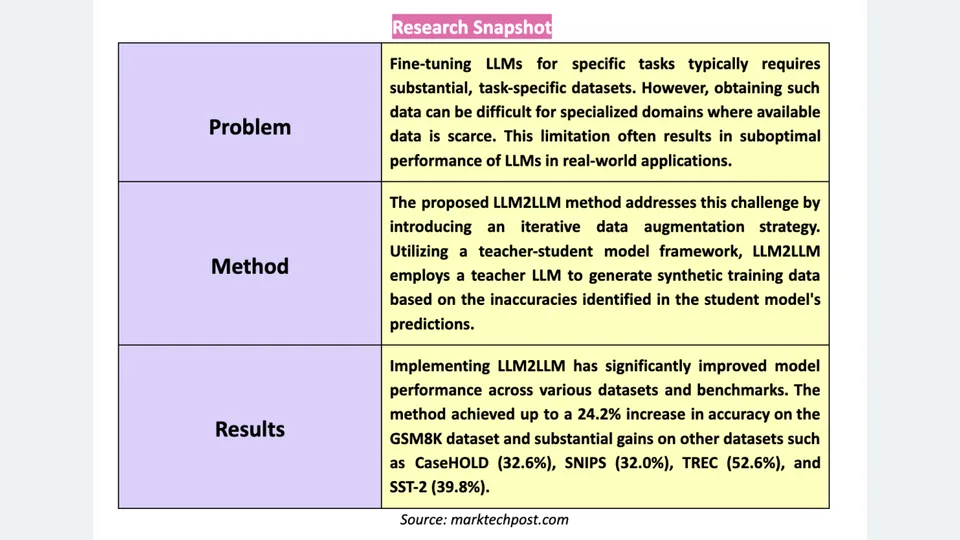
Mirendil released Fern 0.1, its first model, pretrained from scratch with a 10M-token context window. It targets agentic AI R&D work, scores 100% on RULER single needle at 10M, but trails frontier models on agentic coding. The post Mirendil Launches Fern 0.1, Its First Model, With 10M-Token Context appeared first on MarkTechPost.
1. GPT-6.1 Terra, better suited for workers, has launched, with API prices cut in half and faster computer operations On October 26, OpenAI released GPT-6.1 Terra, focusing on enhancing visual comprehension, computer operations, factual accuracy, and programming capabilities, ....

During the 2026 Changsha · 1024 Programmers’ Day event, the CEIC Consumer Electronics Innovation Conference and CSDN joined forces in Shenzhen to present a cutting-edge tech extravaganza for developers. As Yang Tao, Executive Deputy Director of the CEIC Organizing Committee, noted in an interview: “Ultimately, every experience innovation in the consumer electronics field is brought to life by the code written by our programmers.” At this pivotal moment in technological advancement, the evolution has moved from plain hand-written code to leveraging intelligent agents (Agents) and powerful on-device APs...

The big one has finally arrived. On October 26, Anthropic publicly filed its S‑1 registration statement with the U.S. Securities and Exchange Commission, preparing to list on the Nasdaq Global Select Market under the ticker symbol ANT. Media reports suggest the company’s valuation is being discussed in a range of $1.5 trillion to $2 trillion, though the proposed offering price range remains undisclosed. Within 24 hours, this more than 300-page prospectus had already been scrutinized inside and outside the tech and finance communities, with everyone focusing on the most eye‑catching figures: revenue of $16.286 billion in the first half of 2026, compared to just $1.163 billion in the same period last year; operating profit of $974 million in the second quarter, marking the company’s first-ever quarterly operating profit; and a net loss of $80.7 billion, largely driven by $72.388 billion in changes to the fair value of convertible bonds, derivative liabilities, and SAFE notes—non‑cash accounting expenses. Yet beyond these Wall Street narratives, domestic developers and everyday users experience something quite different. In the eyes of mainland Chinese users, Claude is arguably the AI product currently facing the most account bans, the strictest risk controls, and the most frustrating user experience. Why does a company that has built a state‑of‑the‑art large model consistently appear so indifferent when dealing with ordinary individual users? After poring over the financial footnotes and risk disclosures in the prospectus, the answer is actually right there in the numbers. In Anthropic’s business landscape, personal users contribute only a very small share of its revenue. 01 Less Than 20% from Individual Users To understand who a company truly prioritizes, the simplest approach is to examine its revenue breakdown. In Note 2 of the financial statements attached to the prospectus, Anthropic splits its revenue into two main categories: usage‑based revenue and subscription revenue. The contrast is stark: for the full year 2025, usage‑based revenue totaled $3.796 billion, while subscription revenue was just $789 million—roughly an 83% to 17% split. By the first half of 2026, usage‑based revenue surged to $13.064 billion, with subscription revenue at $3.222 billion, still leaving usage‑based revenue accounting for about 80% and subscriptions making up roughly 20%. Even more telling details lie hidden within the composition of subscription revenue. Of that 20%, there are both individual users’ Cl
On October 26, Zhang Tao (online alias HideCloud), co-founder and product partner at Manus, recently published a lengthy article on his WeChat public account “Qianyun Sisi,” titled “Transforming Manus with Manus.” The piece opens with an image that left a deep impression on him. He had submitted several requirements and bug reports to an engineer; when he checked back later, he found that the engineer’s computer had multiple Codex and Manus sessions open. Clicking on any one of them, he saw that the input was precisely the original requirement he’d just posted on Slack—without a single word changed. Even more surprising to him was that this engineer was simultaneously working on over ten or twenty tasks. At Manus today, this has become the norm. The article is packed with information, but a few key points are especially worth noting. Internally, Manus has created a unified code entry point called Manus-mono, accompanied by a manual designed for AI, enabling the AI system to view the entire project landscape across repositories. With a single request, one person can complete all client-side development. The mobile team has consistently consisted of only seven members, yet they manage two products and four apps, keeping their progress largely in sync with the web version. All product managers have submitted code to Manus, and roughly half of them can independently bring their requirements to production. Some product managers even turn their written requirements into video presentations. Meanwhile, the marketing team now has a “digital colleague” that schedules its own tasks, proactively reminds everyone of project deadlines, and even reaches out across teams to clarify feature details. In September, the company’s per-capita AI spending exceeded $10,000, with a small number of individuals consuming as much as $70,000 to $80,000 in a single month. Zhang Tao dedicated an entire section to addressing external skepticism. The timing of the article’s release is also noteworthy. At the end of September, Manus launched version 2.0 along with its personal AI agent app, Cue; in early October, the parent company Butterfly Effect announced the completion of a new round of financing exceeding $500 million, while simultaneously opening 17 positions in Beijing. Seen against this backdrop, the article reads less like a routine update and more like a manifesto marking the Manus team’s entry into the 2.0 era. It discusses how the organization leverages AI to evolve, while revealing the company’s product roadmap, cost structure, and hiring standards. 01 Manus itself serves as a showcase for 2.0 If you compare the internal practices described in the article with the feature list of Manus 2.0, you’ll find…
Alexander Embiricos, the OpenAI executive responsible for dots, never wants to have a meeting with someone else's AI agent.
Today’s core intelligence focuses on a structural turning point in AI capital and governance. Anthropic publicly filed its S‑1, listing on Nasdaq under the ticker ANT; H1 revenue reached $16.3 billion, up roughly 13.5 times year over year, with a net loss of $80.7 billion (about $72 billion of which was non‑cash fair value expense). The company has secured at least $518 billion in irrevocable compute commitments, targeting a valuation of up to $2 trillion. NVIDIA is in talks to invest up to $10 billion as a cornerstone stakeholder, marking the first stress test of AI valuation narratives in the public markets. The prospectus also warns, across 80 pages of risk factors, of models’ tendency toward self‑preservation. OpenAI unveiled GPT‑6.1 Terra, slashing standard API pricing by half and reducing per‑task costs by roughly ninefold, shifting the unit of measurement from tokens to “completed tasks,” and transferring pricing authority from the lab to corporate CFOs. Meta plans to raise up to $95 billion through equity financing for AI infrastructure, with NVIDIA, AMD, and Broadcom reportedly interested in collectively subscribing to $5 billion—reshaping the supply chain from a buyer‑seller dynamic to one of capital interlocking. Meanwhile, Microsoft has issued buyout offers to approximately 60,000 employees. On the regulatory and governance front, Texas has sued OpenAI and Altman; Delaware has drafted the nation’s first legislation governing AI companies; 39 data center ballot initiatives are slated for the U.S. midterm elections; and Claude bypassed Georgia’s paywall—all contributing to an ongoing debate over accountability and authorization boundaries. Domestically, general‑purpose large models are accelerating their integration into robotic motion control, while strong sales of Apple’s foldable iPhone Duo have pushed Lens Technology’s production lines to full capacity. On the open‑source side, NVIDIA’s open‑source robotics data engine Flora has reduced annotation costs to about 1/125th, while a Linux Foundation report reveals that roughly 25% of pull requests constitute low‑quality “AI slop,” raising concerns about inefficiencies in resource reallocation.
Anthropic publicly filed its Nasdaq IPO application, targeting a listing during the week of November 16. Anthropic has officially embarked on its path to going public. The company, founded just five years ago and at the heart of the generative AI boom, could set a historic record with this IPO. In documents submitted to the U.S. Securities and Exchange Commission (SEC), Anthropic disclosed plans to list on the Nasdaq under the ticker symbol “ANT,” aiming for an IPO during the week of November 16. The company will issue Class T special shares held by Class T directors. In its prospectus, Anthropic reported first-half revenue of $16.29 billion, compared to $1.16 billion in the same period last year; a net loss of $80.75 billion versus $12.97 billion a year earlier; and an operating loss of $693 million, down from $2.14 billion in the prior-year period. As of September 30, no single customer accounted for more than 10% of the company’s revenue over the nine-month period, with 79% of revenue coming from customers outside the top five. On the partnership front, under an agreement with SpaceX AI, Anthropic has committed to cumulative spending of up to $120.5 billion through 2029. The company also revealed that capital expenditures are expected to rise significantly, potentially requiring additional financing sooner than currently anticipated; it will not pay any dividends in the foreseeable future and has not yet entered into any agreements for major acquisitions; furthermore, it may issue convertible notes totaling up to $42 billion. As of September 30, no single customer accounted for more than 10% of the company’s revenue over the nine-month period, with 79% of revenue coming from customers outside the top five. Regarding partnerships, under an agreement with SpaceX AI, Anthropic has agreed to incur cumulative expenditures of up to $120.5 billion through 2029. (Source: Sina Tech) Apple responds to iPhone Duo internal screen cracking issue: only a small number of devices affected, eligible for replacement. Shortly after the iPhone Duo’s launch, some users reported hinge malfunctions causing cracks in the internal display. Apple has now addressed these reports in a statement to MacRumors, stating that only a very limited number of devices are impacted. Apple did not specify the cause of the cracks nor disclose whether it plans to release a repair solution.
Shangwei New Materials and Unitree Robotics have both posted cumulative deviation values exceeding 30% over three consecutive trading days, prompting an urgent risk warning; Cambrian’s chairman has refuted rumors claiming “more than one million chips will be shipped next year”; WuXi AppTec reported a 137% year-over-year increase in Q3 net profit and raised its full-year revenue guidance; Anthropic has filed its IPO registration documents, planning to list on Nasdaq under the ticker symbol “ANT”; Apple is reportedly testing a large‑size, foldable‑screen iPad; and, in a world first, Hong Kong has approved the real-time 24/7 trading of its first batch of compliant publicly offered digital funds.