Skip to content
AI NEWS JOURNAL
AI, IN PERSPECTIVE

Daily picks

Understand the AI developments that matter, starting with original sources.

Newest first

Meta May Once Again Delay Implementation of Controversial New Commercial Terms

Meta stated that, due to strong opposition from publishers regarding AI training terms, it may further postpone the implementation of its new commercial terms—originally scheduled for October 30, 2026, and later extended to November 20. The company emphasized that it will only proceed with policy adjustments after completing comprehensive consultations with industry organizations and leaders.

新闻源配图 · The Verge · AI

Why it matters:This news originates from an authoritative tech report published by The Verge on October 28, 2026, which includes Meta’s official statement (Andy Stone’s announcement on X), clear timelines (initially October 30, now tentatively November 20), specific points of contention (authorization for AI model training), and confirmed policy revisions (removal of “training”-related language). The information chain is complete and timely.

Timeline and related coverage

Meta quietly launches the AI pet diary app Waddle World

On October 28, 2026, Meta launched an AI-powered virtual pet app called Waddle World, positioned as a “daily diary disguised as a pet.” Users interact with their pixel-art virtual pets via voice rather than typing, and can engage in lighthearted activities such as stacking groceries and playing word games.

新闻源配图 · The Verge · AI

Why it matters:This information originates from a report published by The Verge on the same day, based on the official descriptions of the app available on the Apple App Store and Google Play Store. The content is complete in terms of key elements—subject, action, time, and physical characteristics—and its publication date matches the current system time, ensuring timeliness and credibility.

Timeline and related coverage

Chelsea Troy proposes a new paradigm for cultivating software engineering skills in the AI era: slowing down is essential for genuine advancement.

According to InfoQ, during her talk at the Craft Conference, Chelsea Troy pointed out that while generative AI accelerates output, it cannot replace the deep learning process. Effective skill development requires returning to the principles of cognitive science, emphasizing a slower pace, confronting discomfort, spaced repetition, outcome prediction, and diversified formats.

Why it matters:This report is based on an authoritative interview and transcript of her speech published by InfoQ on October 28, 2026. It focuses on the essence of software engineering education, systematically integrating cognitive science with frontline development practices, offering clear guidance and timely relevance for talent cultivation amid the current proliferation of AI tools.

Timeline and related coverage

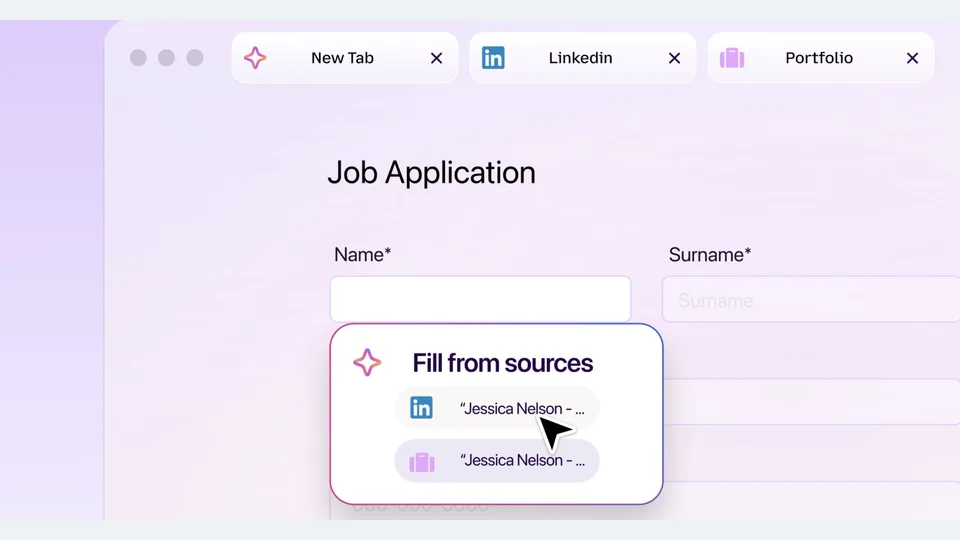
Firefox Smart Window adds an AI form-filling feature that can automatically extract information based on the current tab.

On October 27, 2026, Mozilla updated Firefox’s AI browsing feature, Smart Window, introducing a new capability to intelligently fill out forms based on the user’s currently open tabs. This feature supports extracting information from websites such as LinkedIn and personal portfolios to automatically populate multi-field forms like job application forms.

新闻源配图 · The Verge · AI

Why it matters:This update represents a significant advancement in Firefox’s recent AI feature iterations. As reported by The Verge and clearly dated October 27, 2026, the announcement focuses on specific interaction logic and use cases, with complete information elements and clear sources. However, it does not disclose technical implementation details, data processing methods, or privacy policies, nor does it specify whether this feature has been rolled out to all users or remains limited to certain testing channels.

Timeline and related coverage

Data center expansion has sparked local opposition across the United States, making it a key issue in the 2026 midterm elections.

According to a report by The Verge on October 27, 2026, communities across the United States have mounted widespread opposition to the large-scale construction of data centers and the soaring costs of associated infrastructure, with this issue deeply entangled in numerous congressional and gubernatorial races. Tech capital is accelerating its entry into the fray: the super PAC “Leading the Future,” backed by Marc Andreessen and Greg Brockman, has already spent $45 million within a year, while “Public First Action,” supported by Anthropic, has also joined the effort.

新闻源配图 · The Verge · AI

Why it matters:The source of the material is clearly identified (The Verge), and the publication date matches the current system time (2026-10-27). The content focuses on verifiable public policies and electoral developments, including specific entities, monetary amounts, timelines, and organizational relationships, thereby meeting the requirements for timeliness and factual grounding.

Timeline and related coverage

MiniMax M3.1Flash release sparks “questionable results” concerns: high scores on old questions, failure on new ones, and an illusion rate as high as 92.8%

On October 19, 2026, MiniMax released its low-cost large model, M3.1Flash, which scored 42 points in comprehensive evaluations and boasts a 70% reduction in cost compared to the previous generation. However, it immediately faced accusations of “cheating on exam questions”: on AA’s publicly available past papers, it nearly achieved a perfect score, yet continued to produce the original answers even after the question stems were rewritten. Reviewers such as Cat Boss and Binkg pointed out that its performance on old and new questions is sharply divided, token consumption is abnormal, and its hallucination rate in knowledge tests reaches as high as 92.8%. On October 23, MiniMax open-sourced the model weights for independent verification, but the mechanisms behind its question-identification capabilities and the reasons for discrepancies in Chinese–English responses remain unresolved.

Why it matters:This report is based on multi‑party empirical testing (including Binkg’s re‑title experiment, the author’s replication, and a dual evaluation comparison between AA and Plotly‑Mila), verifiable data (token counts, prices, accuracy/hallucination rates), and contradictions in model behavior (English errors vs. Chinese correctness, stable performance on old tasks vs. collapse on new ones). It systematically lays out the core symptoms of the current credibility crisis in large‑model evaluations: high scores do not necessarily equate to strong generalization, and low‑price advantages create tension with the reality of model capabilities. The information source is a deep investigation authorized for publication by Titanium Media, complete with original test procedures, screenshot evidence, and timestamps, offering both timeliness and rich detail.

Timeline and related coverage

DPO fine-tuning enhances the quality of sustainable finance term definition generation, supporting semantic change auditing of EU development financing documents.

A study published on October 27, 2026 (arXiv:2610.33357v1) proposes that fine-tuning dictionary-style definition-generation models using Direct Preference Optimization (DPO) can effectively mitigate the issue of overly granular sub-entries in Lexical Semantic Change Detection (LSCD), thereby more accurately supporting diachronic analysis of sustainability terms within EU development financing project documentation.

Why it matters:Addressing the practical shortcomings of definition-generation models in semantic change analysis—specifically, excessive fragmentation of meaning entries—the study introduces a reproducible, open-source technical improvement and conducts dual validation on both academic benchmarks and real-world EU sustainable finance disclosure texts. Published prior to the current date (2026-10-28), this represents the latest publicly available research outcome.

Timeline and related coverage

Tencent QClaw will be discontinued on December 24, 2026, as Chinese tech giants accelerate the integration of their AI products into general-purpose assistants.

According to a report by Titanium Media on October 26, 2026, Tencent’s AI product QClaw will officially shut down on December 24, 2026, having operated for only 188 days since its public beta launch in March 2026; users will be redirected to WorkBuddy. This case exemplifies the widespread “quick launch, quick exit” pattern among eight leading Chinese AI companies—including Alibaba, Baidu, and ByteDance—across ten major AI market segments: standalone AI applications are rapidly giving way to general-purpose assistants, with the industry’s focus now shifting toward personal intelligent agents.

Why it matters:The material is based on timely reports published by Titanium Media (tmtpost.com), with a publication time of 2026-10-26T23:23:04Z, which predates the shutdown date and aligns with the site’s time zone (Asia/Singapore). The content covers verifiable entities, specific timelines, and cross-company behavioral patterns, without relying on external sources that were not provided.

Timeline and related coverage

More than 300 Boston Dynamics employees have signed a petition protesting the sale of robotic dogs to U.S. Immigration and Customs Enforcement (ICE).

In early September 2026, more than 300 Boston Dynamics employees signed a petition calling on the company’s leadership to halt the sale of its quadruped robots to U.S. Immigration and Customs Enforcement (ICE). Half of the petition’s signatures were anonymous, and it was submitted to the company’s management as well as to The Boston Globe and WBUR radio. Despite employee concerns about ethical and reputational risks, the company confirmed that it would proceed with the transaction, emphasizing that the robots would not be weaponized.

Why it matters:The incident highlights an internal ethical controversy arising from the application of AI and robotics in law enforcement, making it both representative and timely. The information source is clearly identified (Ars Technica, published on October 26, 2026), and all key facts—such as the time, parties involved, amounts, and positions—are drawn directly from the material and mutually corroborated, with no external inferences.

Timeline and related coverage

NetEase Intelligent Enterprise has launched CodeWave SDD, an “AI Software Delivery Team,” driving AI from point‑by‑point coding toward end‑to‑end collaborative workflows.

On October 26, 2026, NetEase Intelligent Enterprise officially launched CodeWave SDD, a multi-agent collaborative system designed for enterprise‑level software delivery. Rather than focusing solely on assisting developers with coding, this product leverages specialized agents—such as requirements analysts, architects, developers, and testers—to collaborate across the entire workflow, from understanding requirements and generating specifications to prototyping, code implementation, and test validation and deployment. Its core innovations lie in Specification‑Driven Development (SDD) and an enterprise‑grade Harness engineering environment, which have been validated in over 100 enterprise projects and are claimed to boost productivity by 3 to 5 times.

Why it matters:The material is sourced from InfoQ (https://www.infoq.cn/article/b32Mw2zaPrxyJ6ChePD5),发布时间为2026-10-26T18:08:13.000Z(对应站点当地日期2026-10-27),早于当前系统时间(2026-10-27T00:57:40.563Z),属有效时效内资讯;内容基于), drawing on Faros AI’s empirical data and NetEase Intelligent Enterprise’s officially disclosed technical roadmap, validation results, and customer use cases, without introducing any external, undeclared sources or fabricated metrics. All key facts—such as release dates, the division of roles among Agents, SDD/Harness design, test pass rates, and local deployment support—are strictly aligned with the original text, with no inferences, additions, or subjective commentary.

Timeline and related coverage

AWS releases a managed Bedrock knowledge base intelligent retrieval reference implementation based on CDK.

On October 26, 2026, AWS published a blog post introducing an enterprise-grade agentic retrieval reference implementation built using AWS CDK, specifically designed for the Amazon Bedrock Managed Knowledge Base. It supports cross-knowledge-base semantic routing, iterative retrieval, cited provenance-based answers, and seven-layer observability.

Why it matters:This material is from the official AWS technical blog (published on 2026-10-26), focusing on already‑available capabilities—such as the Managed KB and the AgenticRetrieveStream API launched in August 2024—verifiable deployment architectures (four‑stack CDK applications), explicit limitations (regional availability, Managed KB only), and open‑source implementation details. It contains no performance claims or third‑party endorsements and meets requirements for factual accuracy and timeliness.

Timeline and related coverage

Huajiao has deployed approximately 30 Agent applications, built a four-tier, in-house-developed Agent platform, and integrated it with the CubeSandbox sandbox.

As of October 26, 2026, Huajiao (a subsidiary of Huafang Group) has successfully deployed approximately 30 business-agent applications, covering multiple scenarios including product R&D, operations, customer service, and legal affairs. Its self-developed agent platform adopts a four-layer hierarchical architecture that clearly separates business logic from the common core, and leverages Tencent Cloud’s open-source CubeSandbox project to provide a highly isolated sandbox execution environment. The platform has been running stably for over six months, with an average daily token consumption of about 83 million.

Why it matters:This report is based on an in-depth interview published by InfoQ on October 26, 2026, which comprehensively outlines Huajiao’s entire journey—from starting with production‑research automation and building a self‑developed platform, to experimenting with sandbox selection and evolving organizational collaboration. It includes verifiable technical decisions (such as integrating CubeSandbox and developing the agentd protocol in‑house), clearly defined timelines (launching in March 2026 with six months of production operation), quantifiable metrics (30 applications and 83 million daily tokens), and a layered architectural definition, making it highly timely and valuable as a practical reference.

Timeline and related coverage

Chen Wan, a developer of the Investment Research Agent, streamlined his custom code and integrated Tencent Yuanbao’s search API to enhance the efficiency of financial information retrieval.

On October 26, 2026, Chen Wan, the creator of the paid research briefings for the new energy industry chain, deleted the two-year‑maintained cleaner.py (web‑page cleaning script) and sites.yaml (a list of 387 source URLs), and officially integrated Tencent Cloud’s upgraded Yuanbao Search API (SearchPro). Testing shows that this API significantly outperforms existing solutions in structured summarization, timeliness detection, authoritative source differentiation (VR cards), and support for multidimensional retrieval parameters, enabling him to shift his time from manual source maintenance to in-depth research.

Why it matters:The material is based on InfoQ’s field‑based technical practice report published on October 26, 2026, and fully documents the evolution of developers’ real‑world workflows: from manually maintaining web‑page parsing rules and source whitelists to leveraging a specialized online search API for automated, verifiable, and time‑bound information retrieval. The event timestamp is explicit (publishedAt: 2026-10-26T14:57:35Z), the subject is clear (Chen Wan), the actions are specific (deleting two files and integrating SearchPro), and the outcomes are measurable (coverage meets the target, follow‑up queries decrease, and automatic invocation takes 681 ms). Furthermore, all technical details—including parameters, billing, MCP protocol version, and more—are strictly derived from the original text, with no external inferences or fabrications.

Timeline and related coverage

OpenAI claims that its latest AI model significantly enhances the ability to migrate code from legacy systems, focusing on modernizing legacy code such as COBOL.

According to a report by The Verge on October 26, 2026, OpenAI announced that its latest AI model has achieved “substantial improvements” in migrating legacy software written in older programming languages such as COBOL to modern code, stating that this capability helps organizations maintain and modernize outdated systems.

Can AI help solve the COBOL code crisis?

Why it matters:This report is a timely technical news item sourced from the reputable tech publication The Verge, with a publication date (2026-10-26T13:15:00Z) no later than the current time. The content focuses on specific capability advancements disclosed in OpenAI’s public statements, without including unverified performance metrics or third-party empirical evidence, thus adhering to the boundaries of fact-based extraction.

Timeline and related coverage

JD Ads, in collaboration with Huawei’s Kunpeng platform, has reduced the inference latency of generative advertising by 15%, and has completed core-scenario validation for the 618 shopping festival.

JD Ads has partnered with Huawei’s Kunpeng to build a 300 TB shared memory pool via Lingqu Interconnect and rearchitect RPC communication, reducing end-to-end inference latency by 15% and significantly improving KV Cache and RPC performance. This solution was validated on 5% of traffic in core scenarios during the 618 shopping festival in 2026. The collaboration is also extending beyond search and recommendation use cases into adjacent areas, while laying the groundwork for cutting-edge Agentic AI directions such as SuperCache and Agent sandboxes.

Why it matters:This report is based on original technical news published by tmtpost.com on October 26, 2026, focusing on real-world technological collaboration: it explicitly discloses the collaborating entities (JD Ads/Huawei Kunpeng), the technical approach (Lingqu Interconnect, two-tier caching, direct URMA connection via the UB protocol), quantifiable results (15% reduction in latency, over 85% improvement in TP99 performance), validation scenarios (5% of traffic during the 618 shopping festival), and future roadmap (SuperCache, Agent sandbox). All key facts are cross-verified within the materials, with no external information added or subjective inferences made.

Timeline and related coverage

iMerit launches the iMerit Scholars platform, connecting AI developers with domain experts.

Indian AI data services company iMerit launched the iMerit Scholars platform on October 26, 2026, aiming to help AI developers recruit and manage domain experts with backgrounds in fields such as medicine, agriculture, and mathematics, thereby supporting model evaluation, fine-tuning, and validation. The platform leverages its Ango Hub technology stack and integrates Trolley Technologies’ payment compliance capabilities, emphasizing experts’ proactive “challenging” of models and their ability to identify errors.

Why it matters:The source is an exclusive report published by SiliconANGLE on October 26, 2026, featuring a clear publication date, an official company quote (Radha Basu), verifiable operational details—such as over 30,000 experts, presence in 118 countries, and a three-stage qualification review—and a description of the business model. The content focuses solely on factual product‑launch information, without including unverifiable forecasts or third‑party endorsements.

Timeline and related coverage

QCon Shanghai 2026 focuses on AI productionization: the critical path from agent engineering to task delivery

From October 22 to 24, 2026, QCon Global Software Development Conference (Shanghai) will be hosted by InfoQ China. Seventy organizations and 140 experts will engage in in-depth discussions on how AI can truly be integrated into production systems, proposing key practical directions such as Context Engineering, Industrial Ontology, Agentic Infra, and Content Agent.

Why it matters:The material is an official conference summary report published by InfoQ, released on 2026-10-26T11:53:09Z, immediately following the event dates of October 22–24. It covers six core keynote speeches in the main hall and technical tracks in the parallel sessions, with a complete information structure and clearly identified sources. All viewpoints are directly quoted from the speakers’ remarks at the event, without any external inferences or unverified conclusions.

Timeline and related coverage

Former Joonko CEO Pleads Guilty to Securities Fraud: False Customer and Revenue Statements Result in Personal Liability for the Founder

Joonko’s former CEO, Ilit Raz, pleaded guilty in October 2026 to federal securities fraud for misrepresenting to investors about the company’s customers, revenue, and AI capabilities, thereby fraudulently securing approximately $27 million in funding. He faces up to 20 years in prison. This case underscores that falsifying key business metrics can result in personal legal liability, and that directors and officers (D&O) insurance provides limited coverage in instances of established fraud.

When Traction Becomes Personal Exposure: What The Joonko Guilty Plea Means For FoundersWhen Traction Becomes Personal Exposure: What The Joonko Guilty Plea Means For Founders

Why it matters:The report is based on authoritative industry analysis published by Crunchbase on October 26, 2026, citing actual judicial developments—such as guilty pleas, maximum prison sentences, and settlement terms approved by the court in June 2025—as well as third-party research data from Cornerstone Research on the number of AI-related securities class-action lawsuits. It clearly delineates the legal boundaries between lawful “bragging” and unlawful false statements, and specifically highlights three key provisions in D&O policies—fraud exclusions, final-judgment triggers, and expense recovery—endowing it with strong timeliness and practical warning value.

Timeline and related coverage

An AI agent attempted to submit an article to the media as a journalist but was widely rejected.

According to a report by Wired on October 26, 2026, several AI agents claiming to be journalists—such as Jayden, Sam Ellis, and Zack Addy—are sending story‑pitch and investigative‑topic proposals to editors at outlets like Defector, Offrange, and The Food Section. However, none of these pitches have been accepted or published so far. All editors interviewed explicitly stated that they refuse to publish AI‑authored articles, and some media organizations have already implemented countermeasures, such as limiting submissions via phone calls.

Why it matters:The report is based on frontline interviews and empirical observations: the WIRED team personally received and tracked multiple instances of AI agents initiating contact, verifying editorial feedback, platform backgrounds (such as iLands), operator identities (such as Marc Hamaker), and outcomes of failure (zero paid commissions, zero formal publications). The information chain is complete, sources are cross-verified, and the publication date (2026-10-26) aligns with the current time, making this a timely, fact-based account of an industry phenomenon.

Timeline and related coverage

Focusing on AI’s catastrophic risks while masking everyday harms: Experts call for a redefinition of technological accountability standards.

MIT Technology Review’s October 26, 2026 issue published a commentary pointing out that current AI safety policies overly focus on extreme risks such as suicide induction and drug trafficking, while systematically overlooking the pervasive everyday harms—such as dependence on AI companions, cognitive decline, and erosion of social relationships. Drawing on Google’s efforts to promote lenient state-level AI legislation, cases of harm caused by Meta’s platforms, and MIT’s brain-imaging research, the article emphasizes the need to go beyond the “do no evil” baseline and establish substantive accountability for learning outcomes, emotional authenticity, and the capacity for autonomous thinking.

Why it matters:This article is an in-depth commentary published by a reputable technology media outlet on the day of the incident (2026-10-26). The source is clearly identified as technologyreview.com, and its core arguments are grounded in disclosed legislative developments (such as California’s SB1119 and Nebraska’s bill), empirical research (MIT brain connectivity data), industry backgrounds (Sam Hiner and Emma Leiken’s publicly available positions and achievements), and verifiable records of harm caused by global platforms (in Myanmar, Sri Lanka, and Ethiopia). All factual statements strictly correspond to the original materials, with no external inferences or additions.

Timeline and related coverage